What Is 18/20 as a Percent? Quick Answer with Easy Steps
Have you ever checked your test or assignment result and paused for a moment, wondering, “Is this good, average, or excellent?” I have been there too,seeing numbers like 18 out of 20 and asking myself if it’s really a strong score or just looks good on paper.In such cases, an easy grader helps quickly understand whether a score is average or excellent. This kind of confusion is common, especially when results are given as raw marks instead of clear percentages, but there’s no need to worry or panic. If you’re unsure about how to convert scores and what they truly represent, you’re definitely not alone.
If you’re looking for a clear and simple explanation, you’re in the right place.In this guide, I will clearly explain 18/20 as a percent, show you how to calculate it step by step, and help you understand what the final result means in real terms. By the end, you’ll have a clear answer and a simple method you can confidently use for any similar score in the future.
What is 18 out of 20 as a Percentage?
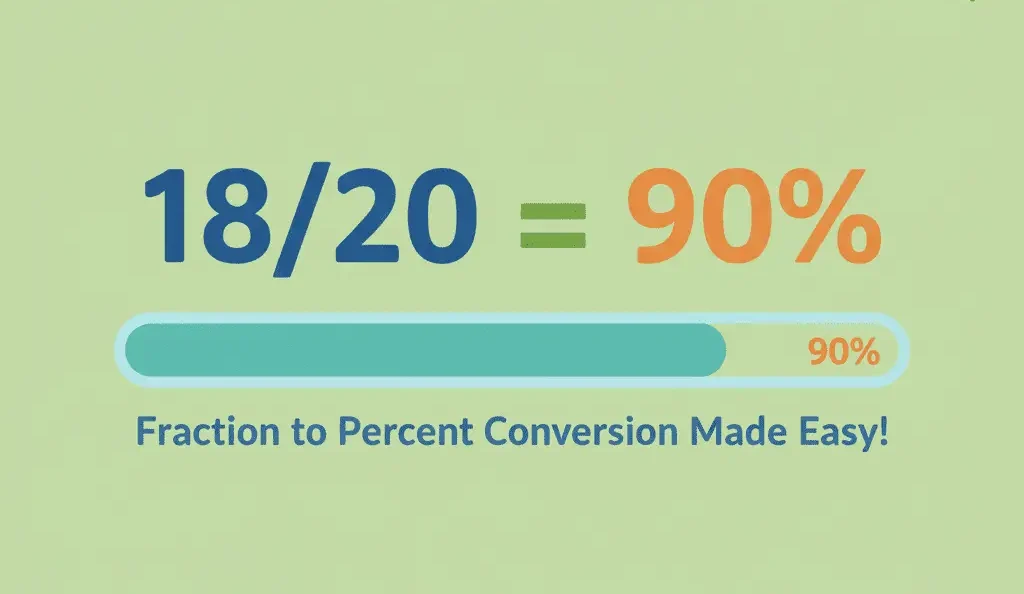
When you want to know what 18 out of 20 is as a percentage, you are measuring how much of the total score was achieved out of 100. This method is widely used in basic mathematics, academic grading systems, and performance evaluation to make results easy to compare and understand. Here, 18 is the numerator (the part achieved) and 20 is the denominator (the total score). Converting this fraction into a percentage value gives a clearer picture of overall performance. When calculated correctly, 18 out of 20 equals 90%, which is considered a strong result in most educational and evaluation systems.To double-check similar scores without manual calculation, a percentage calculator can be useful.
A Percent is Part of a Whole Where the Whole is 100
A percent shows a part of a whole, where the whole is 100. It explains how many parts exist out of one hundred equal parts, which makes values easy to compare. A percentage can also be written as a fraction of 100, helping us understand results clearly. This way of writing numbers is commonly used to show scores, results, and proportions. Using percent makes information simple, clear, and easy to understand in everyday situations.
Clear Meaning of 18/20 = 90%
When a score of 18 out of 20 is written as a percentage, it becomes 90%, which means 90 parts out of 100 were achieved. In simple terms, this shows that most of the total marks were earned, with only a small part missed. A 90% score is usually seen as a strong or excellent result in academic and performance-based systems. It helps people quickly understand results by converting a fraction into an easy-to-read percentage value. This form makes comparison clearer than using raw scores alone.
Is 18 Out of 20 a Good Score?
Yes, 18 out of 20 is considered a very good score in most academic systems. When converted to a percentage, it equals 90%, which is commonly seen as excellent or above-average performance. This score shows strong understanding of the subject, with only a small portion of marks missed. In many schools and colleges, a 90% result places students in a high grade category. So, this score reflects consistent effort and solid academic performance.
Two Steps to Convert a Fraction to a Percent
Converting a fraction to a percent is a simple process that turns a value into an easy-to-understand percentage. This method helps clearly show how much of the whole has been achieved out of 100.
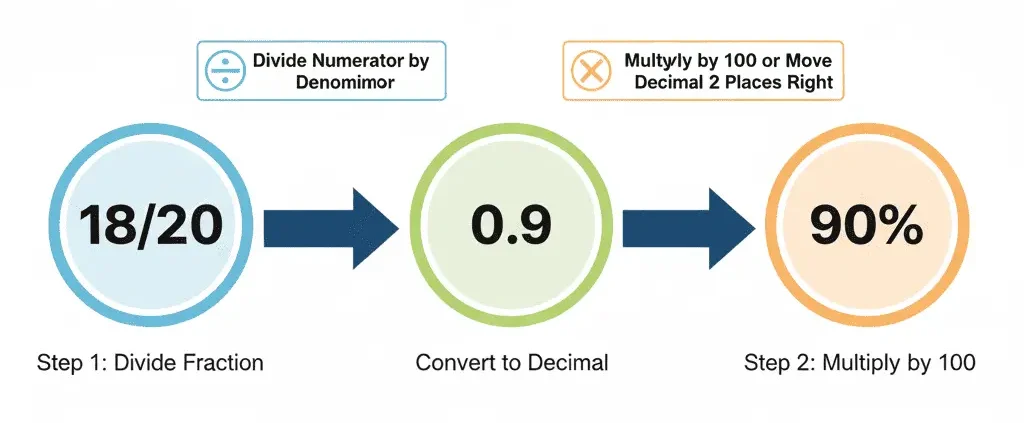
Step 1: Convert the Fraction to a Decimal Number
To start, divide the numerator by the denominator. The fraction bar means divided by, so this step changes the fraction into a decimal value.
- For example, dividing 18 by 20 gives 0.9, which represents the same portion of the whole in decimal form.
Step 2: Multiply by 100 to Convert Decimal to Percent
Next, multiply the decimal by 100 to express it as a percentage. This step shifts the value to show how many parts exist out of 100. When 0.9 is multiplied by 100, the result is 90%, which is the final percentage value.
While learning these steps is important, a grade calculator can quickly confirm the final percentage result.The decimal 0.9 is a base-10 representation of the fraction, showing 90 parts out of 100, with no remainder left after the division.
Explanation of 18/20 Fraction to Percent Conversion
This conversion works because a percentage simply shows a value out of 100.
Dividing the fraction gives a decimal, and multiplying by 100 converts it into
a percentage without changing its actual value.
Methods to Convert 18/20 into a Percentage
There are a few simple methods to convert 18/20 into a percentage. Whether you use long division, fractions, or a calculator, the steps are easy and the final percentage value remains 90%.
Method 1: Long Division with Remainder
In this method, the numerator is divided by the denominator using long division. When 18 is divided by 20, the result comes in decimal form as 0.9. Since there is no remainder, the division is complete. To convert this decimal value into a percentage, it is multiplied by 100, giving 90%. This method is useful when learning manual calculation steps in detail.
Method 2: Using Fractions
This method focuses on rewriting the fraction so it can be easily expressed out of 100. The fraction 18/20 is simplified and then converted into an equivalent value that represents parts out of 100. Once the denominator matches 100, the percentage value becomes clear. This approach helps strengthen the understanding of how fractions and percentages are connected.
Alternate Methods to Convert 18/20
Apart from manual calculation, alternate methods can also be used.
- Calculator: Instantly divides the numerator by the denominator and multiplies the result by 100 to get the percentage.
- Excel or Google Sheets: Uses a simple formula to calculate the percentage value automatically.
- Digital methods: These options are fast, accurate, and reduce the chance of calculation errors.
Methods Comparison: Which One Is Better and When?
- The long division method is best for learning and understanding the full calculation process.
- The fraction method is helpful when working with simplified numbers and building strong basics.
- Calculator or digital methods are better when speed and accuracy are needed, especially in exams or real-life situations.
Each method leads to the same percentage value, but the best choice depends on whether the goal is concept learning, practice, or quick and accurate calculation in real situations.
Decimal and Ratio Comparison
This comparison helps choose the right format depending on whether the goal is calculation, comparison, or clear presentation of results.
- 18/20 as a decimal → 0.9, found by dividing the numerator by the denominator
- 18/20 as a ratio → 9:10, showing the relationship between achieved and total parts
- 18/20 as a percent → 90%, making the result easy to understand out of 100
When multiple test scores are involved, an average grade calculator makes overall performance easier to understand.
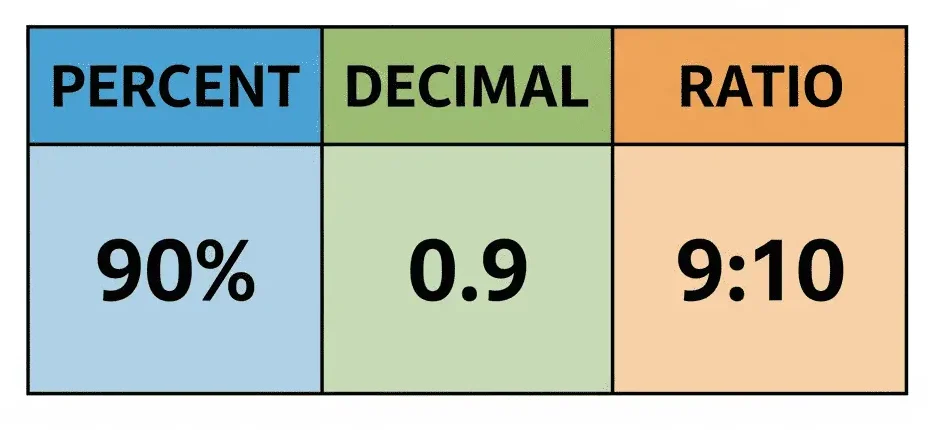
The table below compares percentage, decimal, and ratio formats to help understand their differences.
Percent vs Decimal vs Ratio – Comparison Table
| Form | Representation | Meaning | When It Is Commonly Used |
| Percentage | 90% | 90 parts out of 100 | Scores, grades, results |
| Decimal | 0.9 | Part of a whole in base-10 | Calculations, formulas |
| Ratio | 9:10 | Relationship between two numbers | Comparisons, proportions |
Step-by-Step Conversion of 18/20 to a Percentage
The steps below show the complete conversion of 18/20 from a fraction to a percentage.
- Start with the fraction 18/20, where 18 is the numerator and 20 is the denominator.
- Divide the numerator by the denominator to convert the fraction into a decimal value.
- The result of the division is 0.9, which represents the same part of the whole in decimal form.
- Multiply the decimal by 100 to express it as a percentage.
- The final percentage value becomes 90%, showing the result out of 100.
Fraction → Decimal → Percent
| Stage | Representation | Explanation |
| Fraction | 18/20 | Shows the part achieved out of the total whole |
| Decimal | 0.9 | Result of dividing the numerator by the denominator |
| Percentage | 90% | Same value expressed as parts out of 100 |
Calculate Percentage of Two Numbers
To find a percentage between two numbers, a simple formula is used. This method works for any fraction and clearly shows how much one number represents out of a whole.
General Formula
(Part ÷ Whole) × 100 = Percentage
- Part → the value you have
- Whole → the total value
Example Using 18 and 20
- Part = 18 (the numerator)
- Whole = 20 (the denominator)
- First, divide the numerator by the denominator:
- 18 ÷ 20 = 0.9 (a decimal value)
- Next, multiply the decimal by 100 to convert it into a percentage:
- 0.9 × 100 = 90%
- This shows that 18 out of 20 equals 90%, making it easy to understand the result as a value out of 100.
Calculate Your Grade Percentage and Letter
This explains how a score is interpreted using percentage grades and letter grades within an academic grading system. The focus is on understanding educational performance in a clear and simple way.
What Grade Is 18 Out of 20?
A score of 18 out of 20 converts to a percentage grade of 90%. This means most of the total marks were achieved, with only a small portion missed. In academic settings, this level of performance is considered strong.
90% A-
A 90% is commonly graded as A- in many academic grading systems..To understand how this score affects your overall academic result, a final grade calculator helps combine multiple assessments.The letter grade A- represents excellent performance and shows a high level of understanding of the subject. It is just below the highest grade category in many grading systems.
Letter Grades for a 20 Question Test
In a 20 question test, each correct answer affects the final percentage grade. A score of 18 correct answers results in 90%, which usually falls into the A- grade range. This system helps students quickly understand their performance using both numbers and letter-based evaluation.
Real-Life Uses of Percentage Scores
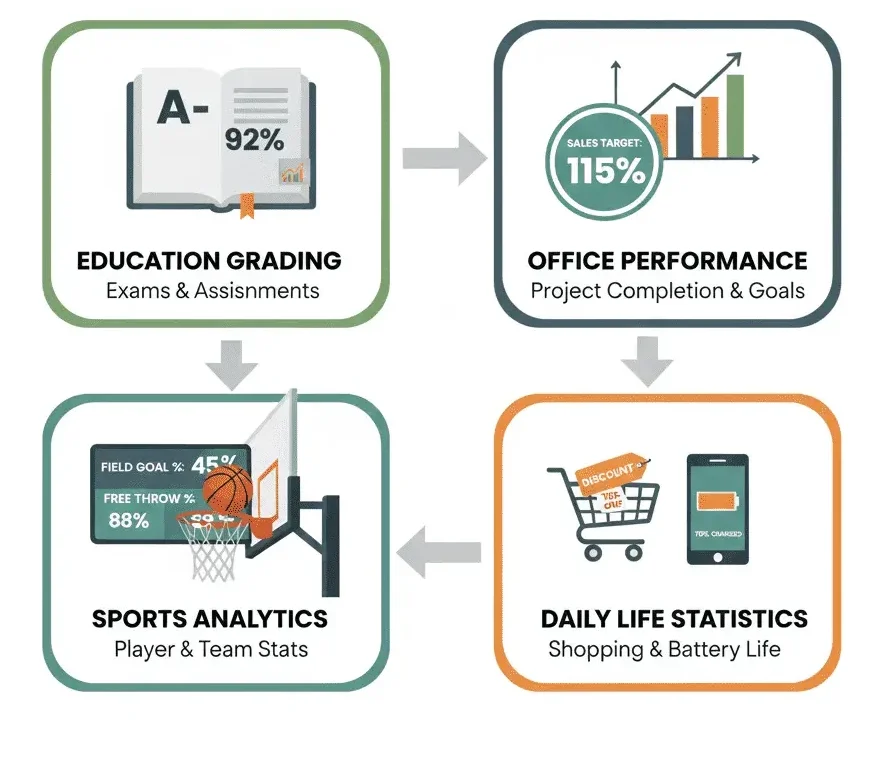
Percentage scores are not limited to exams. They are widely used to measure performance and progress in different areas of daily life.The points below explain how these scores are used in everyday life.
- Education: In schools and colleges, a percentage grade shows how well a student performed out of 100, making results easy to compare across subjects and tests.
- Office performance: In workplaces, percentage values are used to track task completion, performance reviews, and achievement of targets based on a whole set of goals.
- Sports & quizzes: Players and participants are often evaluated using percentages to show accuracy, success rates, or scores achieved compared to the total attempts.
- Daily-life examples: Percentages are also used in everyday situations such as tracking progress, measuring success levels, and comparing results in surveys or activities beyond exams.
This shows how percentages help present results clearly and consistently in many real-world situations.
Why Percentages Matter?
Percentages help people understand and compare information using a common reference point. By expressing values in a standard format, results become easier to interpret across education, finance, surveys, and everyday decision-making. This consistency allows quick comparison without needing to analyze raw numbers in detail.
- Education: Percentage grades help evaluate student performance and allow fair comparison between different tests, subjects, and scoring systems.
- Finance: In finance, percentages are used to understand interest rates, discounts, growth, and changes in value, making financial decisions clearer.
- Surveys & statistics: Percentage values help present data results in a simple form, showing proportions and trends within a whole group.
- Everyday decision-making: Percentages support daily choices by helping people compare options, measure progress, and understand outcomes quickly and accurately.
Using percentages makes complex data easier to understand and apply in real life.
Common Mistakes to Avoid
When calculating a percentage, small errors can change the final result. Avoiding these common mistakes helps ensure accurate and clear calculations.
- Reversing the numbers: Dividing the denominator by the numerator instead of the correct order gives a wrong decimal value.
- Forgetting to multiply by 100: A decimal must be multiplied by 100 to convert it into a percentage.
- Rounding too early: Rounding the decimal before completing the calculation can reduce accuracy.
- Misreading the whole: Always identify the correct whole before applying the formula.
By avoiding these mistakes, percentage calculations remain correct and easy to understand.
Score to Percentage Chart (Out of 20)
This table helps quickly compare scores out of 20 with their percentage values.
| Score (Out of 20) | Fraction | Decimal | Percentage |
| 20/20 | 20/20 | 1.0 | 100% |
| 19/20 | 19/20 | 0.95 | 95% |
| 18/20 | 18/20 | 0.9 | 90% |
| 17/20 | 17/20 | 0.85 | 85% |
| 16/20 | 16/20 | 0.8 | 80% |
| 15/20 | 15/20 | 0.75 | 75% |
| 14/20 | 14/20 | 0.7 | 70% |
This percentage table helps quickly compare a fraction, its decimal value, and the final percentage, making score interpretation faster and clearer.
Definitions of Key Terms
Understanding these basic terms makes percentage calculations easier and clearer.
- Percent: A percent represents a value out of 100 and is used to show how much of a whole has been achieved.
- Fraction: A fraction shows a part of a whole and is written with a numerator over a denominator, such as 18/20.
- Decimal: A decimal is another way to express a fraction using base-10 numbers, like 0.9, which represents the same value as a fraction or percent.
- Ratio: A ratio compares two numbers to show their relationship, such as 9:10, without converting the value into a percent.
Important Glossary Terms for 18 out of 20 as a Percentage
These glossary terms support clear understanding of fraction to percent conversion and help readers follow calculations with confidence and accuracy.
- Percentage: A way of expressing a value out of 100, used to show proportion or score clearly.
- Fraction: A numerical form that represents a part of a whole, written as numerator/denominator.
- Numerator: The top number in a fraction, showing the achieved part, such as 18.
- Denominator: The bottom number in a fraction, showing the total whole, such as 20.
- Decimal: A base-10 representation of a fraction, like 0.9, which equals the same value as a percentage.
These glossary terms make it easier to follow fraction to percent conversion and understand the final percentage value correctly.
Conclusion
Now you don’t need to feel confused about your score anymore. You’ve learned how to calculate 18/20 as a percent, what the result means, and why it is considered a strong score. Most importantly, you now have a simple method you can use for any similar marks in the future. Your problem is solved, and you can confidently understand percentage scores going forward.
Frequently Asked Questions
What is 18 out of 20 as a percentage?
To calculate the percentage, divide 18 by 20 and then multiply the result by 100. This calculation gives 90%, which means 90 parts were achieved out of a total of 100. It is a clear way to understand overall performance using a standard percentage format.
What is 18/20 as a percent?
To convert 18/20 into a percentage, divide 18 by 20, which gives 0.9, and then multiply by 100. The final result is 90%, meaning 18 correct answers out of 20 represent a very strong score, often considered excellent performance in most grading systems.
What is the letter grade for 18 out of 20?
A score of 18 out of 20 converts to 90%, which is commonly graded as an A- in many academic grading systems. This letter grade indicates strong academic performance and shows that only a small portion of marks was missed.
Is 18 out of 20 considered an excellent score?
Yes, 18 out of 20 is generally considered an excellent score. When converted into a percentage, it equals 90%, which reflects strong understanding and high performance in most academic grading systems.
How many marks are needed to get 90% out of 20?
To score 90% out of 20, a student needs 18 marks. This is calculated by dividing 18 by 20 and converting the result into a percentage.
What is 18/20 as a decimal?
When 18 is divided by 20, the result is 0.9. This decimal form represents the same value as the fraction and the percentage, just expressed in base-10 format. It is commonly used in calculations and formulas.
What is 18/20 as a percentage out of 100?
Converting 18 out of 20 to a value out of 100 gives 90%. This means that 90 parts were successfully achieved out of a possible 100. Writing scores this way makes comparison easier and more understandable.